






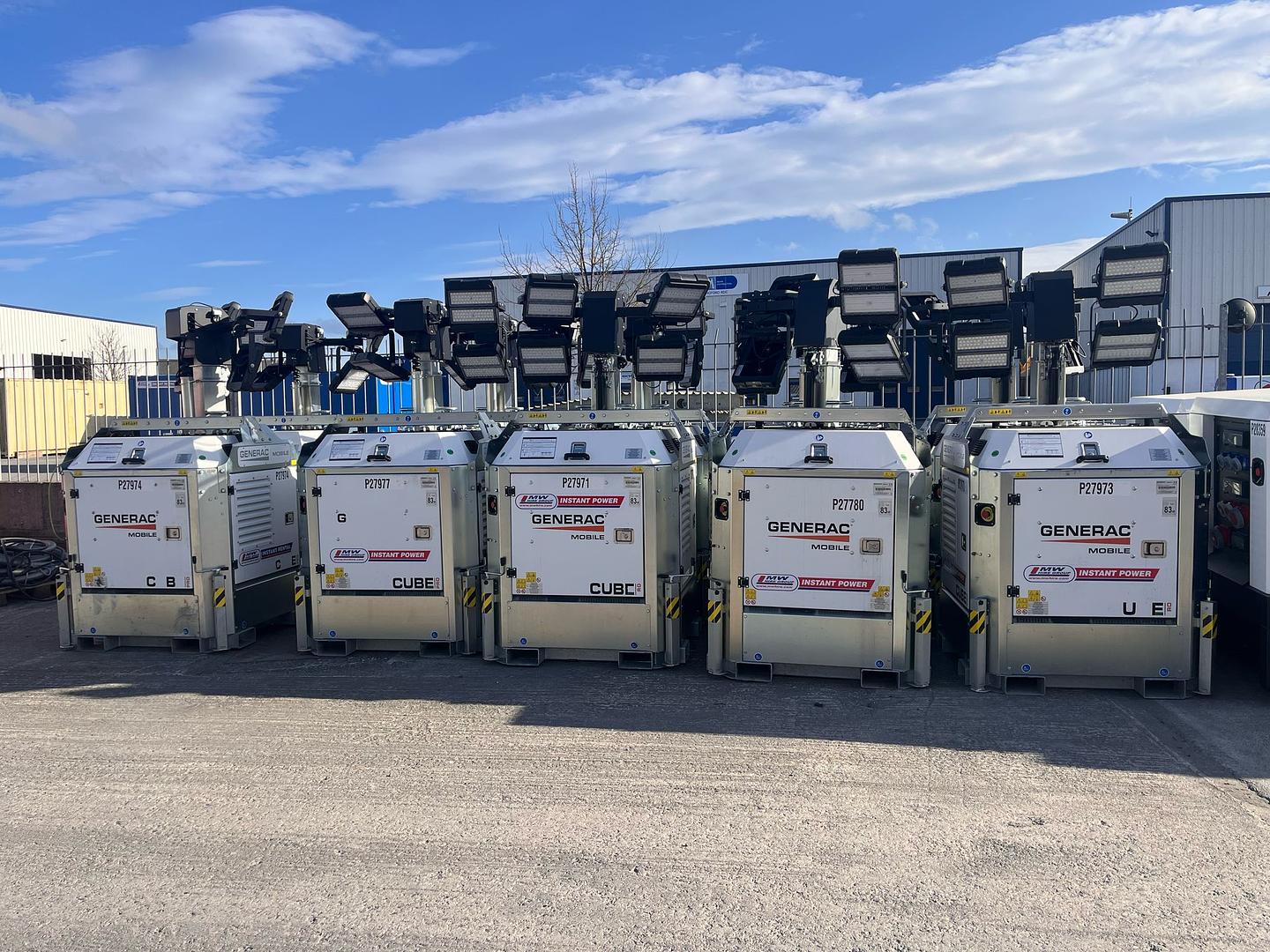
Hybrid Tower Lights: Key Benefits as Days Get Shorter and Projects Push On
As we move into the darker, colder months, job sites and outdoor operations face a predictable challenge: less daylight, tougher weather, and tighter schedules. Whether you manage construction, roadworks, utilities, rail maintenance, industrial yards, or seasonal events, reliable portable lighting becomes a critical part of safety and productivity.
Hybrid tower lights (also called hybrid light towers) are increasingly the go-to solution for organizations that want dependable illumination while reducing fuel costs, noise, and emissions. By combining a diesel generator with battery storage (and, in some configurations, solar charging), hybrid light towers deliver high-performance construction site lighting with far greater efficiency than traditional diesel-only units.
What Are Hybrid Tower Lights?
A hybrid tower light is a portable lighting tower that uses a combination of power sources—typically a diesel engine plus a battery pack—to run LED fixtures efficiently. The diesel engine can charge the batteries when needed, while the batteries can power the lights during low-demand periods. This intelligent power management reduces run time on the engine without sacrificing light output.
For many operations, the result is simple: you get the same or better illumination as conventional light towers, but with improved fuel efficiency and a smaller environmental footprint.
Why Hybrid Light Towers Make More Sense This Time of Year
1) Longer Nights Increase Operating Hours—and Fuel Costs
As daylight hours shrink, light towers run longer. In late fall and winter, it is common for sites to need lighting from mid-afternoon through early morning. With traditional diesel-only light towers, that often means extended engine run time and frequent refueling.
Hybrid tower lights cut fuel consumption by allowing the engine to run only when charging is required. Batteries handle the load for extended periods, especially when paired with efficient LED lighting. The outcome is lower fuel spend and fewer fuel deliveries—both especially valuable when weather complicates site access.
2) Reduced Refueling Supports Safer, More Reliable Operations
Fuel handling introduces risks: spills, fire hazards, and downtime. When a light tower runs out of fuel, productivity can stop, and safety risks rise immediately—particularly on roadworks, night construction, and active industrial sites.
Because hybrid light towers reduce fuel burn, they generally require fewer refueling interventions. This improves reliability, helps keep crews focused on high-value tasks, and supports cleaner, more controlled job sites.
3) Quieter Worksites During Night Shifts and Near Residential Areas
Many projects continue after hours to minimize disruption, especially in city centers or near residential neighborhoods. Noise restrictions often tighten during evening and early morning periods.
Hybrid tower lights can operate in low-noise or battery-only modes for significant stretches, reducing disturbance while still delivering bright, consistent illumination. This can be a practical advantage for permits, community relations, and meeting project requirements without sacrificing productivity.
4) Better Sustainability and Compliance Outcomes
Across construction and infrastructure projects, environmental performance is increasingly tied to bid requirements, reporting, and corporate sustainability goals. Hybrid light towers support these initiatives by lowering engine hours and reducing emissions compared with diesel-only solutions.
For organizations tracking carbon reduction, transitioning portable lighting to hybrid light towers is often a visible, measurable step that can be implemented quickly—especially through rental fleets or phased equipment upgrades.
5) Improved Performance in Variable Winter Conditions
Cold weather introduces operational complexity, but hybrid systems can help maintain consistent lighting while optimizing generator run time. Modern hybrid light towers are designed for demanding conditions and can provide stable, flicker-free light output with LEDs that perform well in low temperatures.
Additionally, many units include smart controls that manage charging cycles and load demands, helping crews maintain illumination without constantly monitoring fuel and runtime.
Core Benefits of Hybrid Tower Lights for Construction and Outdoor Work
Fuel Efficiency and Lower Total Cost of Ownership
Fuel is one of the biggest ongoing costs of portable lighting. Hybrid light towers are designed to reduce consumption significantly by minimizing generator runtime. Over a season of long nights, fuel savings can be substantial—especially for organizations operating multiple towers across several sites.
Reduced Maintenance Through Lower Engine Hours
When a diesel engine runs less, it generally requires fewer service intervals and experiences less wear. Hybrid tower lights often translate into:
- Lower maintenance frequency and costs
- Less downtime due to servicing
- Better equipment availability during peak season
High-Quality LED Illumination for Safety and Productivity
Most hybrid tower lights are paired with LED fixtures that deliver strong coverage and consistent brightness. Good lighting improves hazard visibility, helps operators work more precisely, and supports safer movement for vehicles and pedestrians on site. In winter, when wet surfaces and poor visibility are common, this is a direct safety benefit.
Operational Flexibility Across Multiple Use Cases
Hybrid light towers are well suited to diverse applications, including:
- Construction site lighting for extended shifts
- Roadworks and traffic management at night
- Utilities response and emergency repair work
- Outdoor storage yards, depots, and industrial facilities
- Seasonal events requiring low-noise lighting
This flexibility is especially useful at this time of year, when organizations often need to scale operations quickly due to weather-driven scheduling changes or urgent infrastructure maintenance.
How to Choose the Right Hybrid Light Tower
Not all hybrid tower lights are identical. When selecting a unit to rent or purchase, focus on performance and suitability for your working conditions:
- Light coverage and output: Confirm lumen output, mast height, and distribution pattern to avoid dark spots or excessive glare.
- Battery capacity and runtime: Evaluate how long the tower can run on batteries alone and how charging is managed.
- Noise levels: If you work near occupied buildings, look for verified low-noise or silent-mode specifications.
- Fuel tank size and autonomy: Longer autonomy can be critical during winter storms or restricted access periods.
- Transport and setup: Consider towing, lifting points, stabilization, and ease of deployment for small crews.
- Controls and monitoring: Smart controls, automatic start/stop, and remote monitoring can simplify multi-site management.
Best Practices for Using Hybrid Tower Lights in Fall and Winter
To maximize performance and minimize disruptions during colder months:
- Plan lighting layouts early: Align tower placement with work zones, access routes, and traffic control requirements.
- Reduce glare and shadows: Adjust mast angles and fixture direction to improve visibility without blinding operators or drivers.
- Protect the unit from site hazards: Position towers away from high-traffic pinch points and ensure proper stabilization in wind.
- Schedule routine checks: Even with reduced maintenance, inspect cables, fixtures, and power systems regularly—especially after storms.
- Track fuel and runtime data: Understanding real-world usage helps optimize future deployments and confirms savings.
Conclusion: A Smarter Lighting Strategy for the Darker Season
Hybrid tower lights offer a compelling combination of fuel efficiency, low-noise operation, reduced emissions, and high-quality LED illumination—benefits that become even more valuable as the year shifts into longer nights and harsher conditions. For construction managers, utility teams, and event operators, hybrid light towers can improve safety, cut operating costs, and deliver more dependable site lighting when it matters most.
If your teams are preparing for winter schedules, now is an ideal time to evaluate hybrid light towers for upcoming projects—either by adding them to your fleet or specifying them through a trusted equipment rental partner.